


Ashford's historic quarter is small enough to walk twice in an afternoon and layered enough that you will want to. This route covers roughly a mile and a half — churchyard to river, timber frames to blue-hour shopfronts — and it is built around one idea: chase the light as it falls, and let the streets tell you what to shoot. Two hours, one lens if you like, and a plan loose enough to abandon when something better appears.
Plan the Two Hours Around the Light
The most useful decision you will make all afternoon is when to start. Begin about ninety minutes before sunset. That gives you hard, directional light on the architecture while you are still fresh, hands you golden hour in the open spaces near the end, and leaves you blue hour in the narrow streets, where the sky barely matters anyway.
A quick word on direction. At this latitude the sun sits in the southern half of the sky for most of the year, so on a street running roughly east to west, the south-facing side holds the light longest while the opposite side drops into shade earlier. In a town of tight lanes that difference is the whole photograph. Walk a stretch once, note which facades are actually lit, then come back along the other side.
Keep the kit simple and keep moving:
- A standard zoom, 24–70mm equivalent, covers almost every frame on this route.
- One fast prime, 35mm or 50mm, for the last half hour when the light falls away.
- A spare battery and a lens cloth. Churchyard dust and riverside spray both find glass.
- Comfortable shoes. Setts and uneven paving are part of the character, and part of the hazard.
- Something to take notes on. You will not remember which alley gave you that frame.
0:00–0:25 — The Churchyard and the Palace Ruins
Start high, at the church. The tower is the landmark you have been navigating by all day, so photograph it as one: from the far side of the churchyard, with branches of a yew closing in on the top corners, or from directly below, tipped back, using the pale sky as a plain backdrop.
The low stone ruins nearby reward a slower eye than the tower does. Look for repeating arches, worn thresholds, and the way gravestones lean at slightly different angles, which reads as texture rather than as sadness if you get close and shoot along the row rather than down it. The light here is still fairly high and will graze across stone beautifully — expose for the brightest highlights so the masonry keeps its detail instead of blowing out to white.
0:25–0:50 — Middle Row and the Timber Fronts
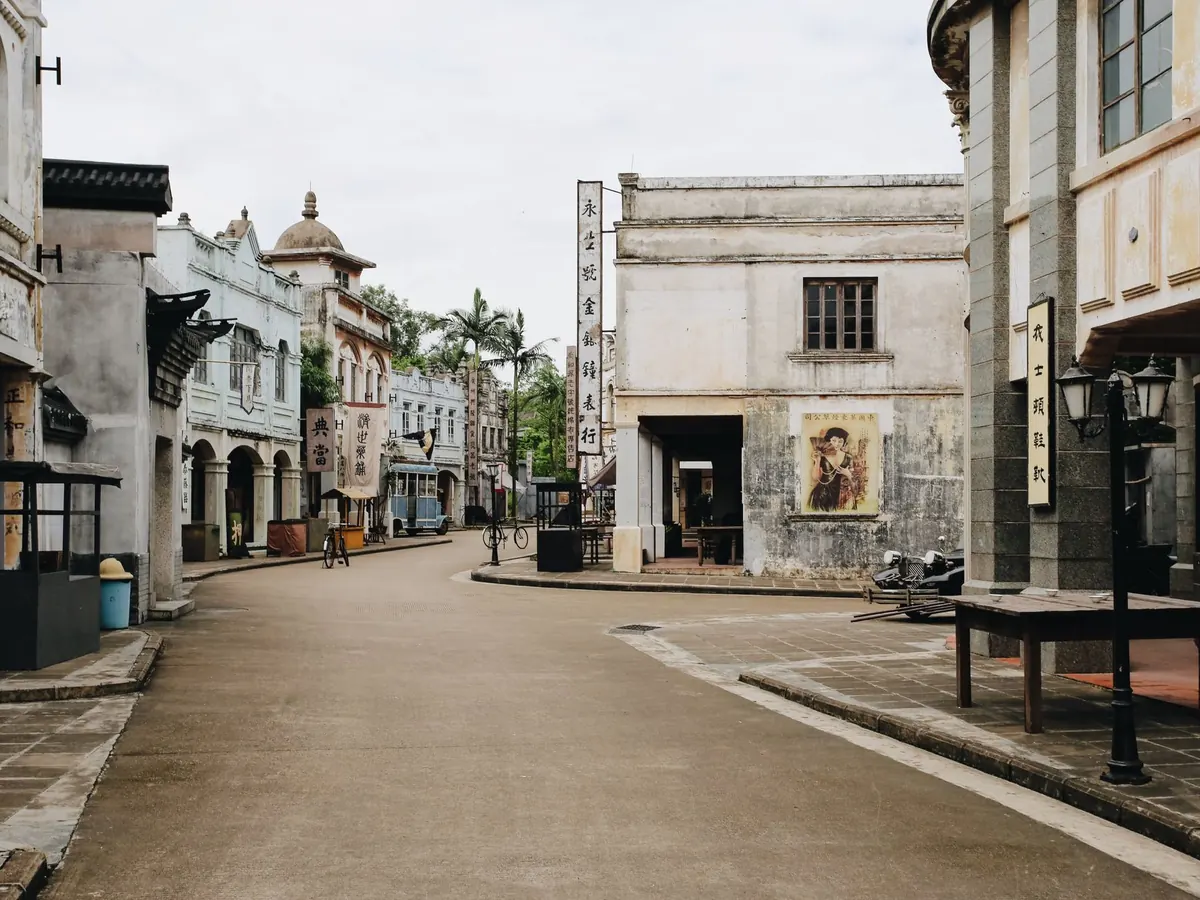
Move downhill into the oldest part of the shopping streets, where the upper storeys lean out over the pavement and the rooflines refuse to agree. This is a section for geometry, not for landmarks.
Composition prompts
- Stand square to a timber-framed facade and let the beams run as diagonals through the frame.
- Get low for a leading line along the kerb, then let it carry the eye to a doorway.
- Use a shop window as a second image: the reflection of the street layered over whatever is inside.
- Frame a bright slice of street between two dark walls, and meter for the bright slice.
Parked cars will intrude. Do not fight them — either get low enough that a bonnet becomes a foreground shape, or wait ninety seconds. Someone always moves.
0:50–1:15 — High Street, the Market Square and the Lanes
By now the sun is low and travelling across the shopfronts rather than down onto them. This is side-light, and side-light is what makes brick, paint and stone look like something rather than nothing. Find the lit side of the street, put yourself in the shade, and shoot across.
People work well here. Let pedestrians walk through the bright band of pavement and meter for that band; they will come out as dark shapes against light, which is usually more interesting than a properly exposed stranger. If someone is recognisable in a frame you plan to publish, ask. Most people say yes, and a two-second conversation is cheaper than a ruined afternoon.
Two hours is enough for one tower, one row of timber and one reflection — as long as you stop trying to photograph everything.
1:15–1:45 — Victoria Park, the River and Blue Hour
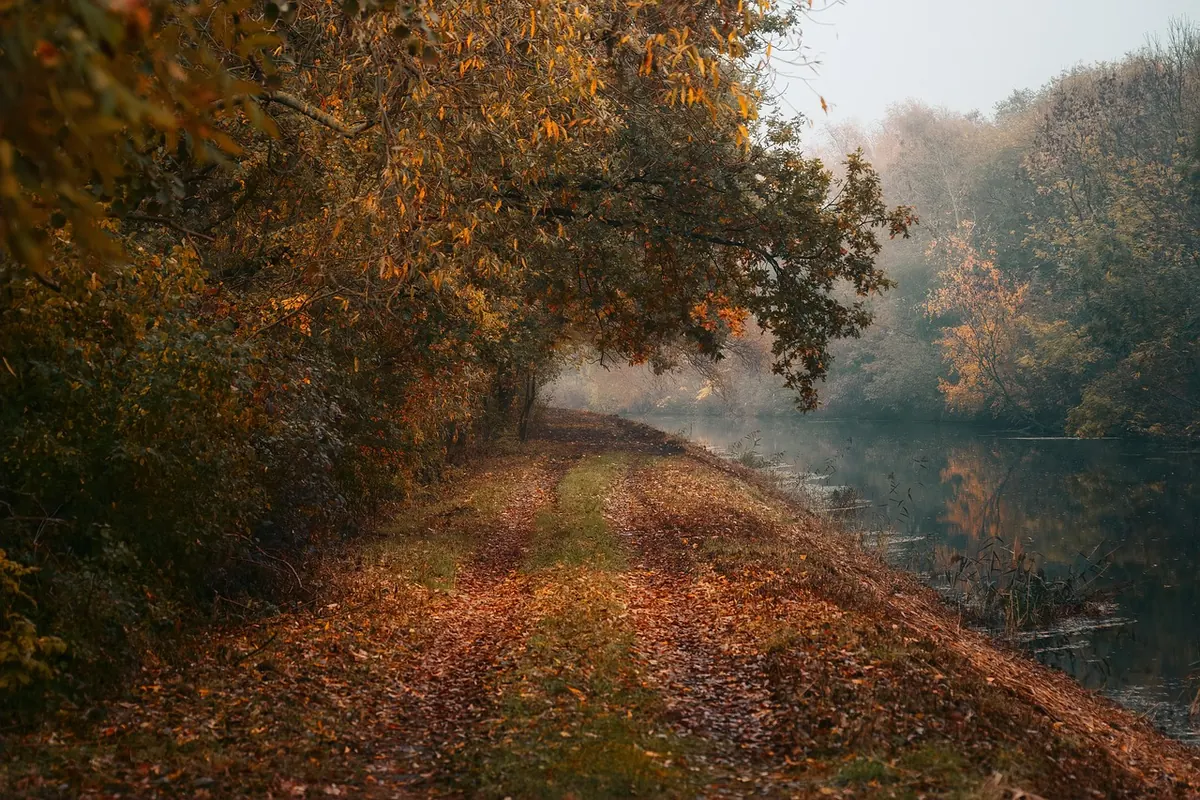
Head for the water. Open ground at this point in the evening gives you the sky, and the sky is the subject. The Victorian fountain, the tree lines and the slow bend of the river all give you something to silhouette against colour, and still water doubles whatever is above it. Kneel down at the bank to get the reflection filling the lower half of the frame.
As the light goes, change your settings rather than your location. Drop the ISO as far as you can, open the aperture, and brace the camera against a wall, a railing or your own knee instead of carrying a tripod you will not set up. Look for lit windows, lamp posts just switching on, and the first warm glow spilling onto wet stone. If rain has passed through, the pavement is the best reflector in town.
1:45–2:00 — The Walk Back
Return the way you came, but on the opposite side of the street. Facades you photographed in flat shade an hour ago are now lit by shop lights below them, and the lanes that looked dull at four o'clock have become dark frames around small bright rectangles. This is the fifteen minutes when the least gear and the calmest hands win. Steady yourself, breathe out, squeeze the shutter. Never step into the road for a frame — find the pavement angle instead.
The Route in Order
- Church and churchyard, including the palace ruins — 25 minutes.
- Downhill to Middle Row and the timber-framed shops — 25 minutes.
- High Street, the market area and the narrow lanes — 25 minutes.
- Victoria Park, the fountain and the riverbank — 30 minutes.
- Back through the lanes to the start, shooting lit windows and reflections — 15 minutes.
After the Walk
Edit the same evening, while you still remember why you stopped. Pick ten or twelve frames, delete the near-duplicates without sentiment, and write the location into each file name. If you intend to sell or publish images with identifiable people or clearly private property in them, it is worth checking the current guidance rather than guessing — a little care now saves awkwardness later.
Then check the sunset time for the date you plan to return. The quarter changes character through the year: long summer light flattens the lanes and pushes you outside for the best frames, while winter gives you low, raking light through the High Street in the middle of the afternoon. Same route, same two hours, entirely different photographs. That is the point of walking it more than once.
Related posts
More stories you’ll love reading